HOW TO WAX G-1000
Adapt to whatever nature brings

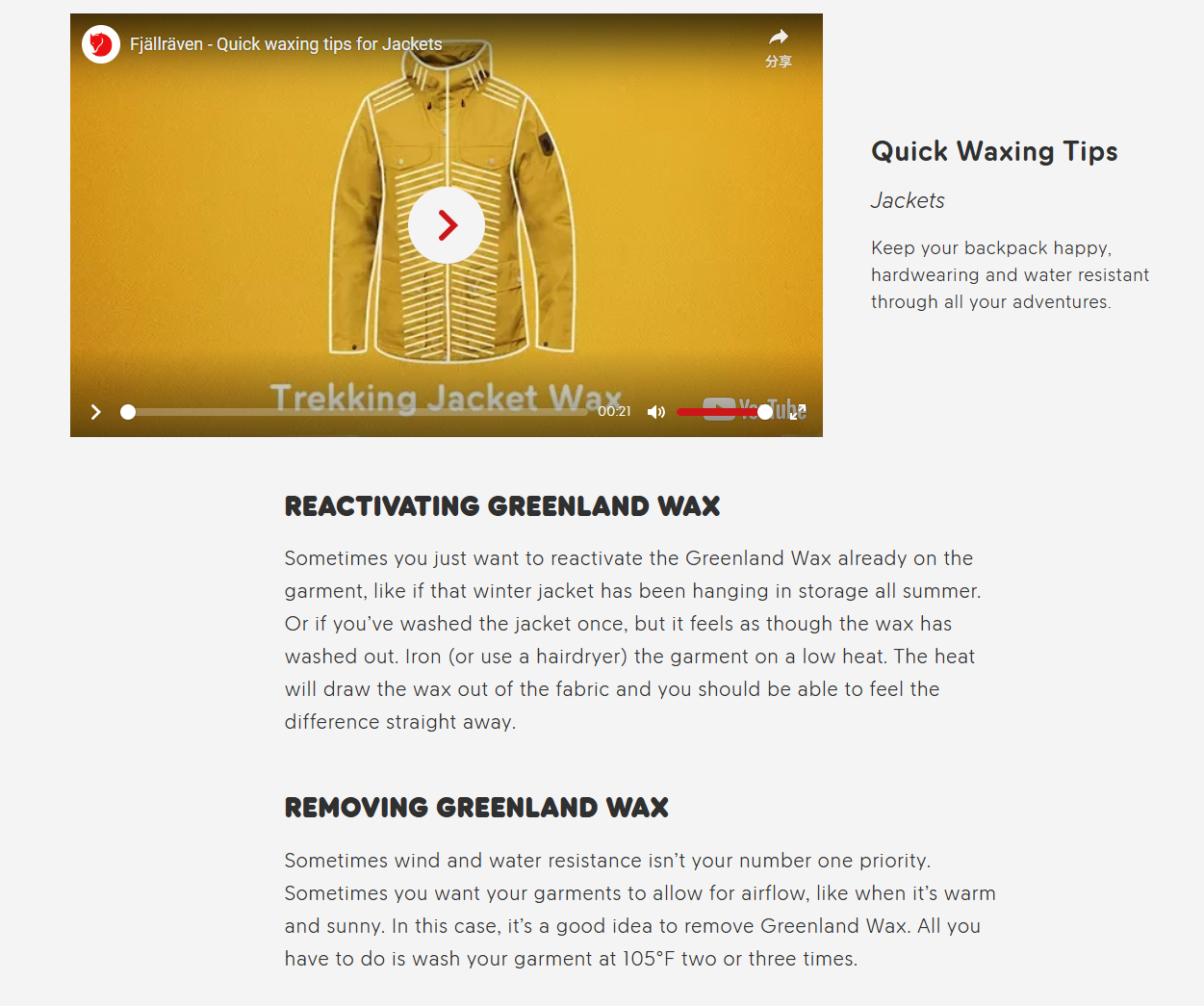
G-1000 is a tough material with a tight weave that makes it naturally wind resistant. By adding Greenland Wax, which is made from a mixture of beeswax and paraffin, you can increase the wind and water resistance and durability.
Most of our G-1000 garments come pre-waxed, but after a few washes and with regular use the wax will need a touch-up. Areas more exposed to the elements such as knees, rear and lower parts of trousers, can benefit with extra wax.
Note that Greenland Wax offers water-resistance, not waterproofness. Find out the difference here.
This step isn’t always necessary, but if you want to make the fabric even more water resistant, repeat the process several times rather than applying a single, thick layer of wax. This is a good idea for exposed sections of the garment such as the hood and shoulders or the knees and rear.
You can also use the flame of a camp stove to melt Greenland Wax. If you choose to wax on the go, hold the garment roughly 8-12in above a steady flame. Don’t start too close! Begin further away and slowly move the garment closer to the flame until you see the wax starting to melt. Be careful not to burn the fabric or yourself. Keyfeatures out the fabric over the flame and move it back and forth until the wax has melted.
What happens when waxing products with down or synthetic padding or Hydratic lining?
So you don’t affect the filling or sensitive synthetic lining used to stop down escaping through fabric, we recommend using a hairdryer to warm the wax. For down, you can also use a tumble dryer on a low heat.